Featured

Self Introduction

Be Humane and Kind

Be yourself; Everyone else is already taken.

— Oscar Wilde.

My name is prince Abdiwahab. I was born in Mogadishu, and grew up in the States. I’m a father of three beautiful kids, a great leader, an advocate, and a role model. I’m a family man and my family plays an important role in my life. For the past seven years, I was a human resources representative, adult literacy liaison and also community advocate in Iowa. I have recently moved to Rochester Minnesota with my family.

I’m interested my things in life, such as sports, outdoor activities, being with family, reading, and watching documentaries. However, currently my goal is to finish my liberal arts and transfer to four year college to pursue a career in political science (art) and computer science. There is no doubt that we all have dreams and goals, but the road to success isn’t easy but with hard work, and passion, it’s possible that I can achieve my dreams.

I’m self motivated, dedicated and a hard working student. Also I’m a friendly, open minded, understanding and humane. I’m just going this blog post going, please stay tuned for more posts and also don’t forget to follow me to get notified when I post new posts.

Demographic, Language and National Identities

Final project second blog post.. in this blog post I’ll be discussing or elaborating different aspects particularly demographics, language, patriotic symbolisms, national identities, and economic system.

Demography: No census was taken in Somalia till middle 1975’s and no census numbers were reported. This was due to lack of infrastructure and technology, and also majority of the people in Somalia are/were nomads and pastoralists and it was possible to get an accurate number. However, population estimates have been made based on the 1980-1990 census, it was recorded a population of ten million. However, a recent census record indicated that an estimate of twenty million people.

Language: All Somalis speak Somalia and the official language is Somali. The language of Somalia is an eastern Cushitic language and it wasn’t written until 1973. MAAY and MAXAATIRI are the two main dialogues in the Somali language. Also, a small percentage of Somalis do speak Arabic, Italian and etc.

Symbolism: Camel is one of the most widely recognized symbols because it provides milk, transportation and also, it’s a symbol of wealth. Another symbol of Somalia is the five-pointed white star on the Somali flag. Each point of the start represents a state that is home to Somali people, such as the southern Somalia, norther Somalia, the Ogaden region, the NFD and Djibouti.

National Identity: Somalia gain its independence from Italia and British and both the south and north united as one nation in 1960 and a new government was established, and a president was elected. The first president of Somali was Adan Abdulla Osman who served from 1960 till 1967. Then Abdirashid Ali Sharmake was elected as president after Adan A. Osman was defeated on election. Sharmake was assassinated October 1969 in Las Anood Somalia. In just view days after Sharmakes assassination, the Somali military took control and a new military government- Supreme Revolutionary Council appointed major general Mohamed Siyad Bare as the new president. Sayid Bare’s principles were based on Marxism as well self-reliance and this known (Dowlada Kacanka) “Scientific Socialism.”

Major Cities and economy: Somalia’s major cities are the port of Mogadishu, Port of Berbera, Hargeisa, Kismayu, Merca/marka, Baraawe, Burao, Baidao, Galkacyo, Bosaaso, Borama & etc. Milk from cows, goats and camels are major food nutrition’s; Other important food nutrition’s are rice, grain, dates and tea with or without milk are also popular foods. There are also different type of breads such the Muufo, a flat. When it comes to economy, farmers in southern Somalia do grow beans, sorghum and vegetable fruits. Certain items such rice, sugar and others are imported from outside. This will be the end of my second blog post…. Please stay tuned for my post where I’ll be presenting other important factor from De Horn of Africa.

“Mohammed Abdullah Hassan.” Military Wiki, Wikia.org, military.wikia.org/wiki/Mohammed_Abdullah_Hassan.

“Somalia.” Countries and Their Cultures, http://www.everyculture.com/Sa-Th/Somalia.html.

Post #1

The overall goal of my writing is to demonstrate historical background, ancient history and the struggle with colonialism.

Historical background: Somalia also known as the land of poet or punt is located in east Africa in the Horn of Africa and it neighbors with Djibouti, Ethiopia and also Kenya. The. Capital city of Somalia is Mogadishu and locally known as Xamar or Hamar and has currently a population of three million residents. The horn of Africa has been a home to Somalis in the ancient times. It’s believes that the Somalis belong to the Cushitic peoples and the overwhelming majority of Somalis speak the Somali language which is part of the Cushitic family. The word Somali are two words combined together which are SOO and MAAL, which together means GO and MILK. Another possible or credible definition proposes that the word Somali extracts/derived from the Arabic language which means wealth “Zawamal” once-more it’s refereeing to Somali riches in livestock.

Ancient history: Archaeological evidences show that Somalia have been inhabited since the stone age era and do have an ancient history, as well modern history. There is an archaeological evidence that indicated that the ancient Somalia did occupied the horn of Africa particularly the land of Punt. In the primordial era, Somalia was known as the land of Punt and there is an archaeological evidence such as an Egyptian document from ancient time as early as 3000 to 15000 BCE show that the land of Punt was a major trading partner of Egypt, Romans, Persians, Greece and also the Chines.

Colonial Struggle: In the years between 1840 and 1886, the British in eastern India established trade treaties with some of local chiefs and kings in Somalia. However, it only took view years before there was an uprising against the British and Italian colonist and this was due to when the Somali’s sought to push Ethiopians and other foreigners out of the Ogaden region. Sayid Mohammed Abdulle Hassan was one of the religious and patriotic leaders who fought against the British, Ethiopians and Italian Empires. He establishes the Dervish movement and also organized warriors and soldiers to drive British, Italian and Ethiopians out of Somalia and his movement lasted about twenty years. However, with the expansion of the European powers, Somalia was occupied and colonized by different colonists, France, English and Italy. The British Controlled the northern Somalia, Italian maintain control of Italian Somaliland until 1941. During the WWII the British took over some of the Italian regions and ruled these regions until 1949.

second post is loading……

“Mohammed Abdullah Hassan.” Military Wiki, military.wikia.org/wiki/Mohammed_Abdullah_Hassan.

Zapata, Mollie. “Somalia: Colonialism to Independence to Dictatorship, 1840-1976.” The Enough Project, 31 Jan. 2012, enoughproject.org/blog/somalia-colonialism-independence-dictatorship-1840-1976.

Mentor Blog

For the past several days I spent many hours just looking up and reading blog after blog as finding a mentor blog/s was the most difficult part of my research project. Somehow, I was lucky to come across few blogs but sadly not all of them have persuaded or attracted my attention. Ultimately, I decided to take control of my research project and create my own unique mentor technique will work for my research paper. For the research project I chose purpose over genre because my research topic is very specific and the purpose behind is to demonstrate and persuading certain audiences also, I want all of ideas and writing to reflect my purpose. Just to give a brief summary of what research topic is about—- my research topic is about the history and culture of Horn of Africa-Somalia… as well understand it’s political uprising and future implications. The purpose of my research paper is to provide broader knowledge, demonstrate the history of Horn of Africa-Somalia as well to create an opportunity for others to learn the unique culture and ethnic heritage of Horn of Africa-Somalia.

There were quite interesting mentor blogs that I came across, but some of these mentor blogs were one-sided, lack of credibility or weak in terms of sources. I’m not here to judge but rather pointing out some of struggles I faced during my search for mentor blogs and this is the main reason why I decided to take control and use my own mentor skills. If I list some of the mentor blogs that I came across are….  Somalia: Colonialism to independence to dictatorship, 1840-1976 written by Mollie Zapata on January 31st, 2012. The author/writer of this blog post talked little about during colonialism, early years of independence and during dictatorship. The same author posted another blog where the author talked about early 1991 to early years of 2012.

Sources:

https://enoughproject.org/blog/somalia-civil-war-years-1990s-present

https://enoughproject.org/blog/somalia-colonialism-independence-dictatorship-1840-1976

Is social media hurting or helping youth?

            “Social media is training us to compare our lives instead of appreciating everything we are. No wonder why everyone is always depressed.” Bill Murray. What is the definition of social media and how is it hurting or helping youth? First to answer this question, I have to look at both the positive and negative impact of social media on our youth. “Social media is computer-based technology that facilitates the sharing of ideas, thoughts, and information through the building of virtual networks and communities.” Social media plays an important role in our daily lives and how we integrate or communicate, because nowadays it’s pretty much just clicking one button to connect with others, and through interactivity we can share or exchange ideas, and information. Furthermore, it allows us to make new friends, and find old friends by simply searching their names….however, as the vogue of social media keeps on growing, there is a mixed feeling of how social media will influence our youth, so the great question is social media hurting or helping the youth?

The use of social media has various advantages such as the ability to connect, share ideas, and information. As Jill Walker stated in chapter one, “with digital cameras, smart phones and social media it is easier to create and share our self-representations” ……. “Social media is about communication with others, but we should be equally aware of how we use social media to reflect upon ourselves”. As the availability of technology increased, social media has become a useful tool, but only very few people know how to use it properly. Furthermore, as the evolution of technology continues, also social media evolves and expands into all over the world. Currently, there are more than four billion social media users around the world, and it’s very popular among youth. For this reason, many parents including myself are worried about how exposure to technology and social media is affecting and hurting teens and youth development. Many parents aren’t aware of the fact that there are hardly any principles or regulations to abide to when it comes to social media, and for this reason many younger teens are exposed to many terrible contents such as violence, and nudism. A survey conducted by different hospitals discovered that social media impacted the health and wellbeing of young teens. Social medias like snapchat, Facebook and Instagram all led to many consequences like increase of depression, anxiety and feeling loneliness. Social media is hurting our youth more than it’s helping. For instance, younger teens are becoming more destructive and unsupportive. They’re lacking and losing significant skills, such as the skills to socialize, interact, and integrate.

Conclusion, I’m not here to judge nor discourage anyone from using social media, it’s at the discretion of the person who intent to use. Social media is a great toll and it offers many advantages such as, it allows to communicate, and make new friends; However, decreased of sociability, stress, anxiety and exposure to horrible contents such violence and nudism are some risk that social media users need to be cautious. Lastly, in order to minimize the risks associated with social media, parents should have an open conversation with their teens about social media safety. We should teach our youth how to use social media safely and responsible. Albert Einstein once said “I fear the day that technology will surpass our human interaction. The world will have a generation of idiots.”

MLA Citation:

Limited, Alamy. “Stock Photo – Warning Sign about Risks of Social Media and Social Network.” Alamy, http://www.alamy.com/stock-photo-warning-sign-about-risks-of-social-media-and-social-network-71863615.html.

Pasternack, Alex. “How to Use Social Media, According to a Mental Health Expert.” Fast Company, Fast Company, 17 June 2019, http://www.fastcompany.com/90356260/social-media-can-hurt-you-these-6-tips-from-a-psychologist-could-help.

Smart Social. “Negative Effects of Snapchat for Teens.” Smart Social, Smartsocial.com, 4 Dec. 2019, smartsocial.com/effects-of-snapchat-teens/.

Why continuing higher education is important to me?

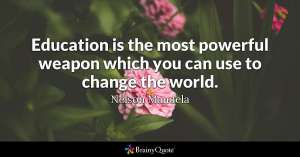
Why is continuing your education after high school important to you?

Continuing education is referred to further education and is a lifelong process and a great journey of personal development. There are many reasons of why pursuing further education is important to me, because it opens greater opportunities to different fields. Just having a high school diploma isn’t enough anymore because technology advances is changing our world and the important of pursuing further education after high school is countless. My name is Prince Abdiwahab and I’m a student at Rochester Community Technical College in Rochester. I’m one of the first in my family to attend college after high school, and continuing education after secondary is very important to me as well to my family. I was born in Mogadishu Somalia just before the civil war broke. My parents fled from Mogadishu when I was a very young age after they were forced out of their home due to the endless conflict between warring clans. Despite the hardship and difficulties that I have encountered early years of my life, yet I was able to overcome many challenges, but lack of education was a common issue for me because there were only very view schools that existed where I grew up. I do apologize for those of you who may have difficulty understanding what it’s like to be born in a war-torn country and not have access to free education, because only very view will relate and understand why education is important.  As of this struggle and hardship, I have always valued education in my life because it opened many doors to me and taught me numerous skills.

Regardless of being a refugee and coming from a war-torn country didn’t prevent me pursuing my dream of continuing higher education. I have always valued education because it’s essential to my success and future. It has never been easy for me to prioritize higher education after high school due to family hardship. But wanting to overcome these hardships and also having the desire of wanting to become a humanitarian worker, community advocate, and great a leader has motivated me to continue my education after high school. There is no doubt that a higher education will allow me to pursue a career of my interest as well higher income and better benefits, but this is only minor aspect of why I want to pursue high education. The main reason why I want to continue higher education has to do with my own personal experience. Both of my parents were illiterates and never had the opportunity to pursue higher education. They both grew up in an environment where higher education was never prioritized due to financial reasons. My parents knew the importance of higher education and for that reason they wanted to see me one day that I graduate from high school and continue my higher education.  

Continuing higher education is important to me because in order to success in life I need to pursue higher education. Just high school certificate isn’t enough anymore and won’t do any-good. Continuing high education will help me gain broader knowledge and become a better person. Since, I’m the first one in my family to attend college, I’m also a role model for my family because I want to inspire my kids and persuade them to pursue their dreams. All of my goals and objectives will remain just dreams unless I continue higher education. My journey to higher education has just started and will not end anytime soon.

MLA Cite: For the image

“Nelson Mandela Quotes.” BrainyQuote, Xplore, http://www.brainyquote.com/quotes/nelson_mandela_157855.

Why Reading Matters?

Reading is defined as cognitive process that involves written symbols such as letters, punctuations and getting the meaning. It’s also a process of building a series of sentences and meanings of words. We tend to read for different purpose, but the main reason is to digest and understand the content (print or web). To read something is to think critically and during the thinking process, we all have different strategies or ways to react as well to perceive the intended information and interpret in a particular way. The ability to read and write is attached to everything we do in daily bases.  

There are many ways to become a better reader and writer but how does reading influences our writing?  Obviously, reading implies comprehension of the subject, the memory to retain the information and also interpreting the intended information in a particular way that will make a sense. Only those who read like a writers are capable of writing like a writers. However, not all readers are a good writers, because only a small portion of good writers are good readers.

Reading has many advantages other than improving writing skills as a whole. For instance, it helps improve and increase our brain capacity in different ways. People who read often tend to be happier than people that don’t read. Reading increases confidence, reduce stress and anxiety, also gives a broader knowledge, and stronger thinking skills. Many studies have shown that, reading to children in early life indicates that they will do well in school. However, on the other hand there are many sorts of dilemmas and obstacles that illiterate people encounter when they can’t read and write. For instance, not been able to read to their children, or finding well paid jobs. Personally, both of my parents came from a rural area of their country and one of them was/is illiterate and the other one is a high school graduate. However, both of them did struggled with their reading skills. As a child a remember that reading was never prioritized in our house because both of my parents came from a low-income family, and they weren’t stable financially so they had to work many hours to support, an take care their family.

In some way, reading plays an essential role in my life because reading made me become a smarter, intelligent, thought me how to communicate well and socialize with others. It also gave me the ability to learn other languages, construct sentences that are grammatically correct and learn new vocabulary words.

Work cite:

  • Basu, Moumita. “How Reading More Can Improve Your Writing Skills.” WisdomTimes, WisdomTimes, 30 Dec. 2015, www.wisdomtimes.com/blog/how-reading-more-can improve-your-writing-skills/.
  • Sandhu, Ravindera. “What Is a Reading? Definition & ProcessPro.” Study.com, Study.com, study.com/academy/lesson/what-is-reading-definition-process.html

What is a community & why is it important?

A community is a group of people that share same commonality such as, values, traditions, religion, customs or identity. The term community has originated from two latin words ‘com’ and ‘Munis’. These two words mean ‘together’ and ‘servicing’ respectively. Community may share a sense of geographical region (e.g. country, town, place of origin or may be neighborhood) or indirect communication. Definitely, a community is a group of people who share something in common and these people have shared characteristics among them. In order to build a strong community, it requires to have the ability to accept others who may be differ or similar from you regardless of gender, age, race and etc. For the most part, it’s very obvious and normal that people that lived in a certain geographical area may develop and adopt similar characteristics, ethics and values, however these people will not relate in terms of moral principles.

The definition of community is too broad and also sophisticated, because the term can be used in a narrower and broader sense. In a narrower sense, community refers to a particular group of people such as the community of X, but in a broader sense, community refers to a larger group such as a nation or community of ABCD. In the past communities were locally based and lived in small area. Also had some type of genealogy relationship (relatives, families). Most importantly communities have had similar identities and backgrounds and this was due to lack of transportation and communication because people didn’t travelled far distance from one-another. Furthermore, traditional community used to be a sign of unity, bring people together to support each other, and overcome obstacles in certain times. Historically definition, community was a group of people lived in one geographical location and shared similar identities or values. Somehow, nowadays the meaning itself has shifted from traditionally to modern term. In these days, people tend to choose their own community and express their identities and goals through these communities.

Today’s world most people will have to rely on a community for different reason. Some rely on a community for protection, religious purpose, sports, education and etc. The fact that communities have considerably likeness and also share similar identities and values, but somehow its existence needs to be justified. According to Graham Lampa from imagining the blogosphere “how can a community be said to exist among individuals, the vast majority of whom have never met one another and do not communicate with one another”. Regardless of Graham’s argument about the existence of community, in my opinion I believe that community will always exist and strive regardless of the outcome.

Thus, being part of a community is an essential part of our existence in this world. Because we all belong to a certain group or community and live together in a way that we share common things such as strength and interpersonal connection and this is what distinguishes us from one other. Every community is unique and differ from one-another

                                    MLA Citation:

Why is Antarctica’s ice melting faster than predicted?

             “The violence that exists in the human heart is also manifest in the symptoms of illness that we see in the earth, the water, the air and in living things.” (Pope Francis, on climate change). Many studies have found that the Antarctica’s giant ice is warming and melting faster than its expected, but the legitimate question is what is driving Antarctica’s meltdown? Antarctica is the earth’s southernmost continent and geographically it’s in the south pole. Antarctica is one of the coldest, windiest and driest continents on the earth. The continent of Antarctica has one of the highest elevations of all continents and most of its land is desert. According to Insidecliatenews “The reason why Antarctica’s ice melting is due to shifting winds driven by global warming.” However, there are other factors and components that do also contribute major problems to the continent, such as burning of fossil fuels, and deforestation.

Definitely, there is no doubt that Antarctica’s ice is melting faster than its predicted, because of man-made environmental problems as well natural disasters that acquire now and then. All of us are aware of that our planet is becoming uninhabitable and extremely warmer. To better understand the relationship between global warming and Antarctica’s ice, it’s also important to define the meaning of global warming and how it corresponds with fossil fuels and industrial productions. “Global warming occurs when CO2 and other air pollutant and greenhouses gases collect in the atmosphere.” Amanda MacMillan from NRDC. Global warming is defined or related to many aspects such when the climate changes and the surface of our planet becomes hot. Global warming has devastating & long-lasting consequences for our planet. The measurable effects of global warming are notable. For instance, sea levels rise due to melting ice from sheets in Antarctica, earth surface warming faster and most of these dilemmas are caused by humans’ activity in a essence of burning fossil fuels.

Deforestation is also another leading origin of global warming and there is a link between Antarctica’s Ice sheet and deforestation. Despite all the great advantages forest gives us, such as protection, capturing greenhouse gases like CO2 and to prevent warming our planet. Somehow, we still strive to deforest trees and create more emission. As more trees are cleared or burnt, more emission and carbon are released into the atmosphere. Trees store a lot of carbon and by deforesting trees we’re adding more problem to the existing problem. To recall, the reason why Antarctica’s ice melts is due to shifting wind caused by global warming.

Despite all the causes of Antarctica’s ice meltdown. Regardless of Global warning, fossil fuels, and deforestation, still the meltdown will continue unless an effective resolution are implemented to protect the planet and reduce global warming. We have already perceived the outcomes of the ice melting driven by global warming. Some of the outcome we perceived are hurricanes and typhoons.

MLA Citation

Rice, Doyle. “Antarctic Ice Melting 6 Times Faster than It Did in ’80s.” USA Today, Gannett Satellite Information Network, 15 Jan. 2019, www.usatoday.com/story/news/world/2019/01/14/climate-change-antarctic-ice-melting-accelerating/2575410002/.

MacMillan, Amanda. “Global Warming 101.” NRDC, 30 July 2019, www.nrdc.org/stories/global-warming-101.

McKibben, Bill. “How Extreme Weather Is Shrinking the Planet.” The New Yorker, The New Yorker, 9 July 2019, www.newyorker.com/magazine/2018/11/26/how-extreme-weather-is-shrinking-the-planet.

Copyright License

The type of license I chose for my blog post is the Creative Commons License. This type of license is important to me because it creates me the ownership and gives me the ability to control who can benefit or use my work for commercial purpose. It’s also important to me that, others who use my work must give me recognition and credit instead of stealing or not mentioning my name or site. By choosing this type of license, will give me the right to reproduce or display any of my work publicly without seeking permission from anyone. More importantly, I want to help people by allowing them to use my work if needed. However, all I’m asking is mention my name or cite me.

Olivia's Blog

My English Blog

JM`s blog

For English Class

Chris's Blog

English Class Blog,

Abde Barre

For English Class

batulo's blog

english class

Haileys Blogs

This blog is for my English class

Supernova

Outbursts of Hot Gases

Abdiwahab Ali

STRONG AND DECISIVE BUT ALSO HUMBLE

Discover WordPress

A daily selection of the best content published on WordPress, collected for you by humans who love to read.

The Atavist Magazine

STRONG AND DECISIVE BUT ALSO HUMBLE

Longreads

Longreads : The best longform stories on the web

WordPress.com News

The latest news on WordPress.com and the WordPress community.

Design a site like this with WordPress.com
Get started